
The Importance of HANS in Auto Racing
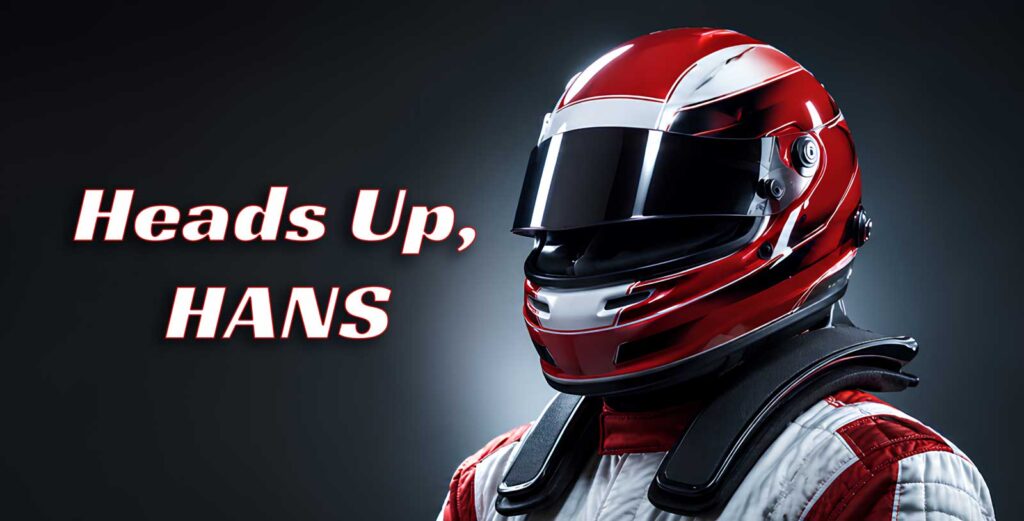
HANS who? HANS isn’t a who. A HANS (Head And Neck Support) device is one of the most critical pieces of safety equipment in auto racing because it dramatically reduces the risk of fatal head and neck injuries, especially basilar skull fractures, during high‑impact crashes.
What the HANS Device Does
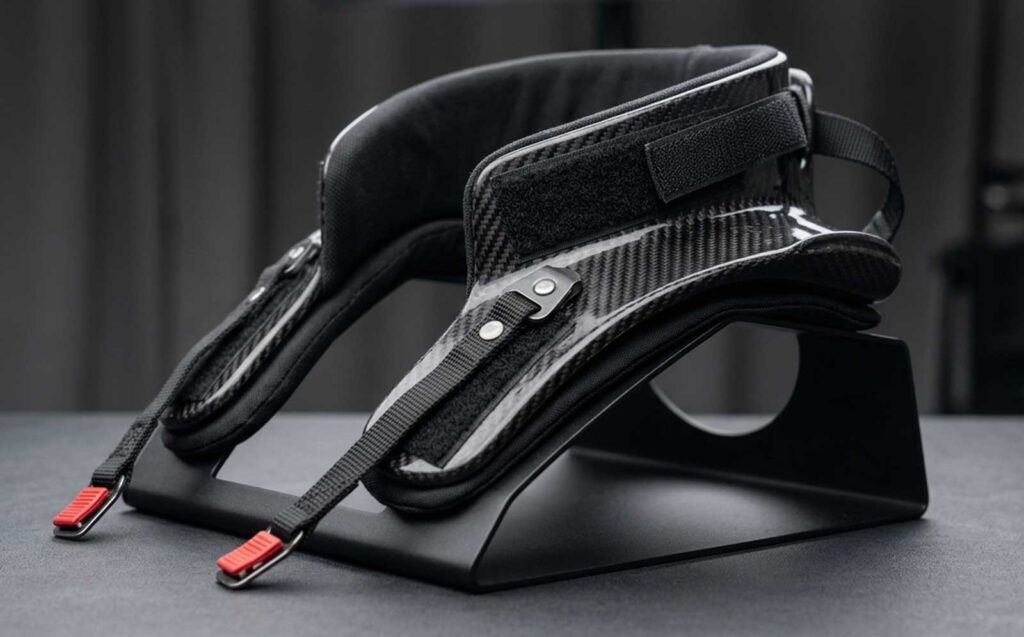
• A HANS device is a rigid collar that sits on the driver’s shoulders and is anchored by the shoulder belts of the harness.
• Flexible tethers connect the collar to the helmet so, in a crash, the head is restrained and moves with the torso instead of whipping violently forward or back.
• This design keeps the head and neck aligned with the chest, transferring crash forces into the stronger torso and belts rather than concentrating them in the cervical spine and base of the skull.
In auto racing, “HANS” refers to the HANS device, a safety system that supports a driver’s head and neck to prevent serious injury in a crash.
Why It’s So Important
- In an unrestrained impact, the seat belts stop the torso while the head continues at speed, loading the neck in tension and shear and potentially causing a basilar skull fracture or catastrophic whiplash.
- Crash tests showed that a HANS device can cut neck tension and shear forces from around 700+ pounds to roughly 210 pounds, a huge reduction that brings loads below known injury thresholds.
- Serious head and neck injuries can occur at impact speeds as low as about 30–35 mph, so even “small” crashes on short tracks or in club racing can be lethal without proper head‑and‑neck restraint.
Impact on Fatalities and Regulations
- The device was developed specifically to prevent the type of basilar skull fracture that killed several drivers, including Dale Earnhardt Sr. in 2001.
- Following Earnhardt’s death, major series like NASCAR, IndyCar, FIA international events, NHRA and others moved to make head‑and‑neck restraints compulsory for competition.
- NASCAR reports no driver deaths from basilar skull fracture in its major series after mandating certified HANS devices, while dozens of fatalities have occurred in environments where such devices are not required and might have prevented many of them.
Practical Advantages for Racers
- The HANS is designed with slack or sliding tethers that allow normal head movement and peripheral vision during racing, tightening effectively only under crash loads.
- Modern devices are engineered to meet standards such as SFI 38.1 and FIA regulations, making them acceptable across most professional and many amateur championships.
- Because of its life‑saving potential, many safety experts consider the HANS device the single most important component of a driver’s gear beyond the harness and helmet, and recommend it even for track days or solo events where rules might not yet require it.
A Bit of History
The HANS concept was developed in the 1980s and commercialized in 1990.
After several high-profile fatalities (including Dale Earnhardt Sr.), major racing series progressively mandated HANS or equivalent FHR devices.
Today, tens of thousands of devices are in use worldwide and they’re considered standard safety equipment for serious circuit, rally, and oval racing.
We Exist For Their Success
Your support makes this possible. Donor contributions are essential for our operations and programs. Your gift enables the Wings and Wheels Foundation to provide vital services, directly linking your donation to tangible, positive outcomes that advance promising young drivers to the next level of achievement in their careers.

TeamWWF uses GiveButter, a non-profit donor management system for secure transactions.
The Wings and Wheels Foundation is a 501 (c) (3) charitable organization
EIN: 93-1688394
Header graphic © Adobe Stock AI. Licensed and edited by A.D. Cook for editorial.