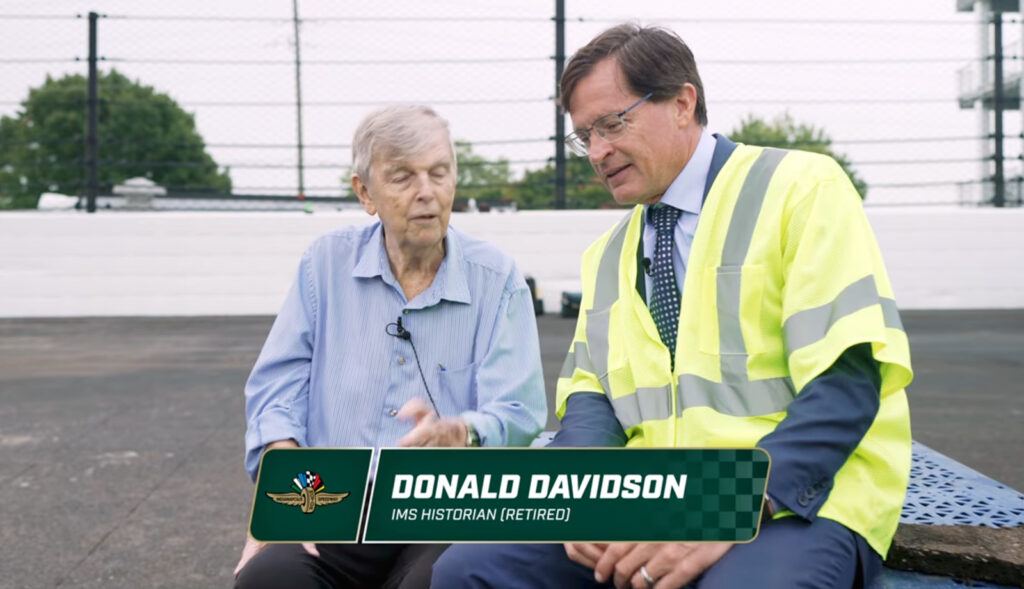

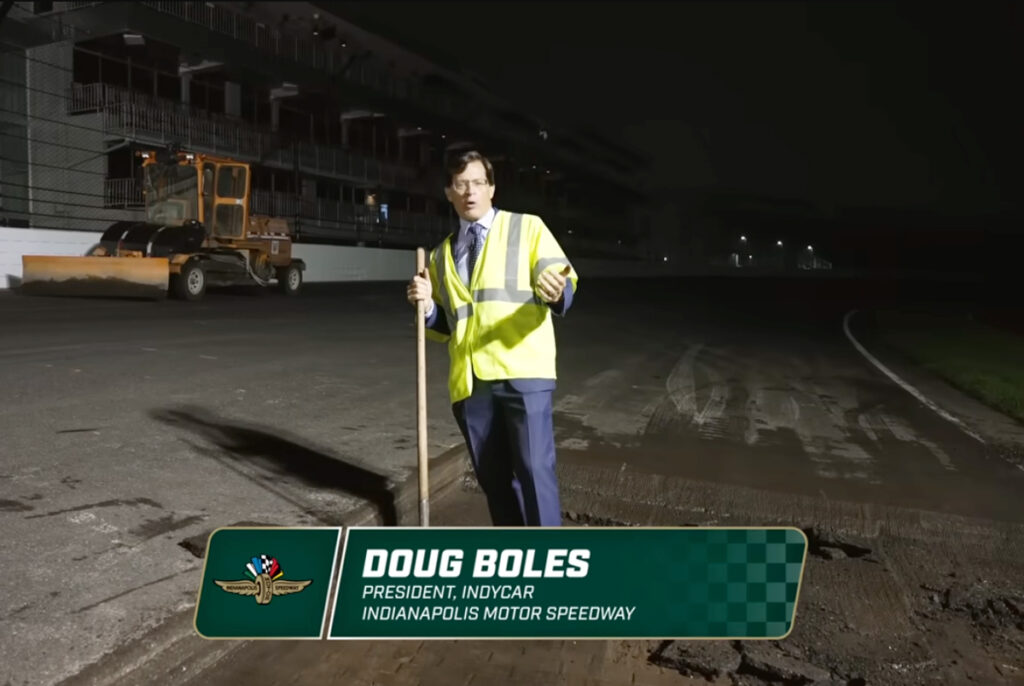
DOUG: So when you talk about history at the Indianapolis Motor Speedway, we all think of the same thing. We think of Donald Davidson. And what’s really cool about Donald, the first behind the bricks, we did feature Donald. So this morning, early, I called Donald and said, “What are you doing?” He says, “Nothing.” And then we brought him out here. Can you believe this? This is history. Unbelievable. 1909.
DONALD: Unbelievable, because we’ve written about this for decades, and now we’re seeing it. It’s just, it’s unbelievable.
DOUG: How amazing to think about, you know, Carl Fisher having to decide what to do with the surface, and he ends up with these bricks.
DONALD: Yeah…
DOUG: Yeah, and that was a big process, but you were telling me that they even tested those bricks before they decided they really wanted them.
DONALD: Well, when they realized crush rock and tar, that’s not working out, we need to do something else, they thought, well, let’s do an experiment. And so what they did on the main straightaway was put down a bed of sand, and then they brought in some Culvert blocks.
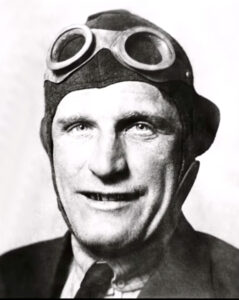 And then Johnny Aitken, who was a driver, was a tester for National Motor Vehicle Company, which was owned by Arthur Newby, who was one of the four partners, who said, “All right, let’s do a test.” And at one point, they drove a stake in the ground, and had like a chain or a frame, and said, “All right, stand on it and wheels spinning and everything. All right, let’s see. Nope. It looks like it’s working. 3,200,000 please.” And then they started trucking them in, by rail from Petersburg.
DOUG: Yep. 63 days, right?
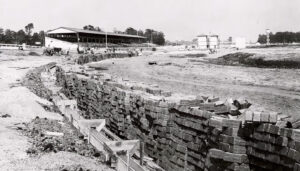 DONALD: In 63 days, yeah, three million, two-hundred-thousand bricks.
DOUG: Pretty crazy. And working at night with some Presto light held, right?
DONALD: Yes. I don’t know if they had two shifts or three shifts, but they just kept going because the track had such a bad rap from the car days, that Fisher said we want to run as soon as we can.
DOUG: So that testing day is pretty rudimentary, but obviously it worked for these bricks because they’ve been here that long. And one of the things we’ll have to do, we will be testing the cars here to make sure that the resurface works well. So that’s something that has been here for an awful long time. But how fun is it? Have Donald Davidson back here where you are…
DONALD: Thank you, Doug.
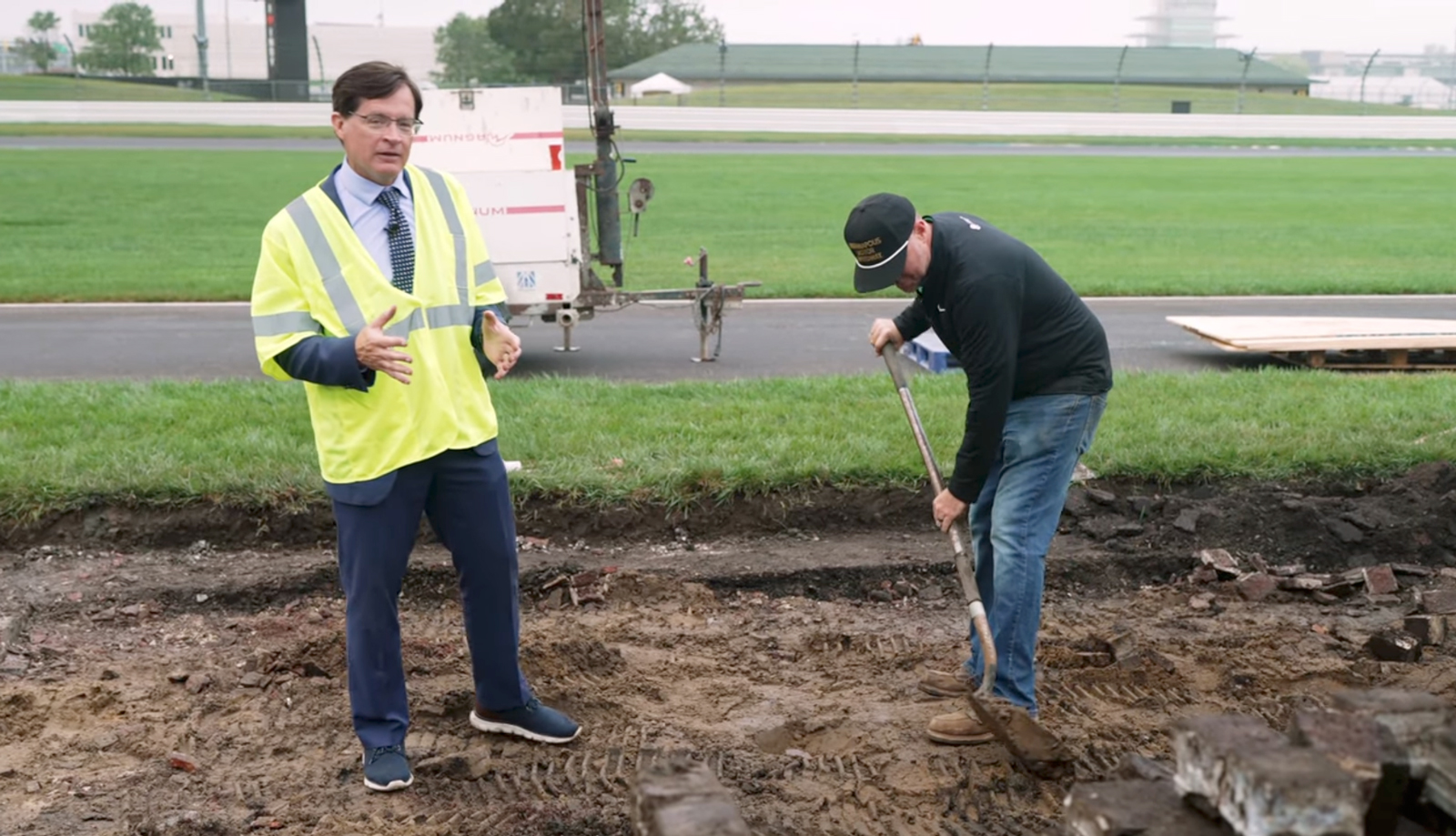
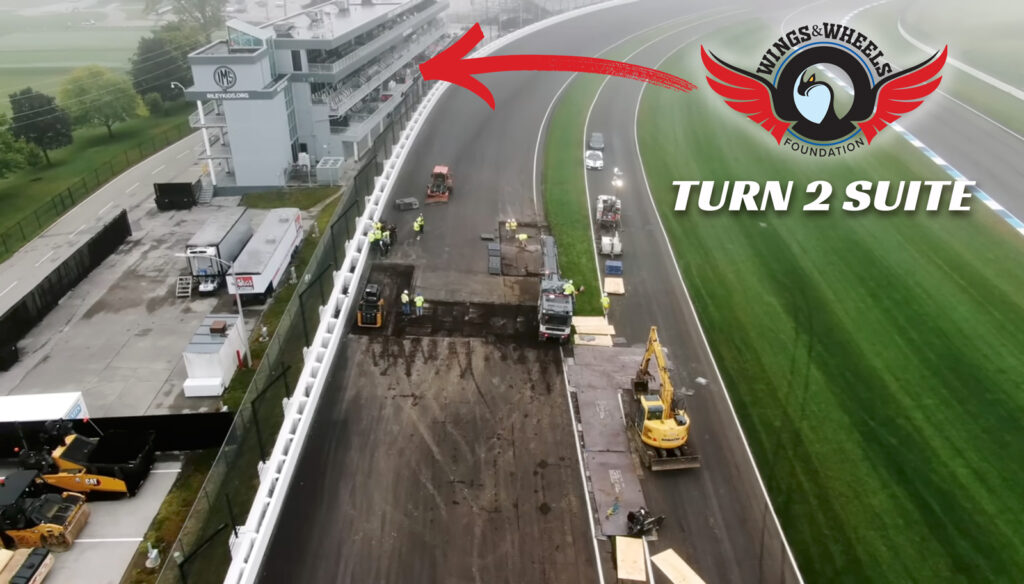
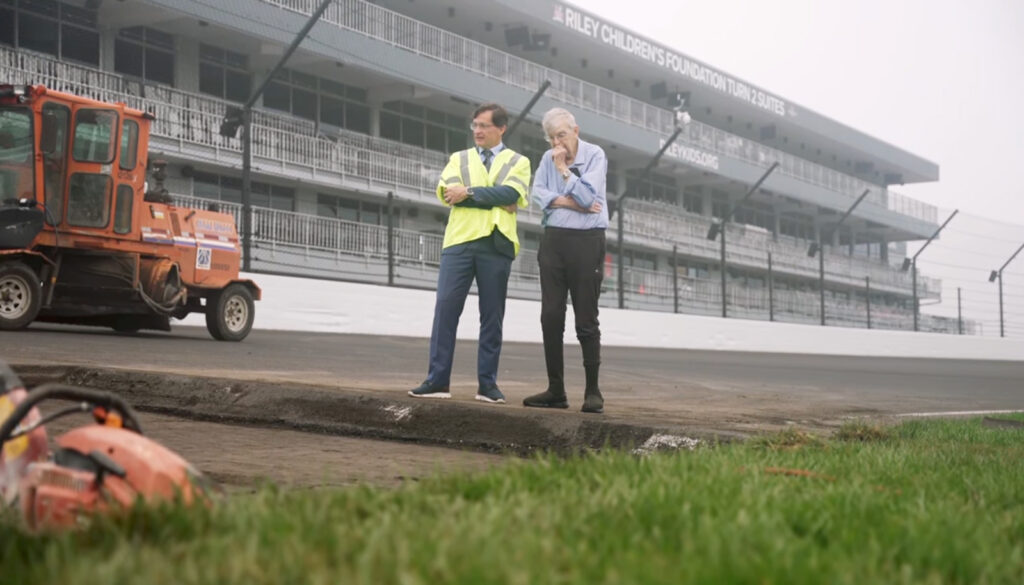
DOUG: So we’re going to have a little bit of fun right now. So, we are on the sand that was put down before the bricks went down in 1909. Tyrone is going to dig up, and like Geraldo Rivera, we may find something here. And actually, what we’re hoping we find is maybe the original surface of crushed stone that actually would have been underneath here. We may not find it, but we thought, why not try.
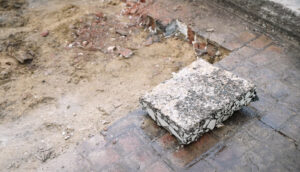 Now, there’s stone in there for sure. Oh, yeah, look at that. That’s, that would be it, isn’t it? Look at that. So, yeah, so that would be the crushed stone, and you can see the dark from the oil that was put on it. The history of motorsport right here. Very cool, original surface of the Indianapolis Motor Speedway raced upon in August of 1909. Wow. That’s, that’s cool. This is the beginning of the Indianapolis Motor Speedway. You know what’s really cool? I’m standing right here, on history. Man, that’s… Oh my gosh. That’s unreal.
Look at that. The tar is still… that’s crazy. Oh my gosh, Sharon, is that how thick it is? Oh, it is. Oh, look at that. That there, oh, that’s amazing. Look at that. That’s outstanding. Tyrone, you know what you’re holding?
TYRONE: Yeah.
DOUG: That is beautiful.
DONALD: See all the chips in there?
DOUG: Yeah, look at the tar still. Right, and then you can see it.
DONALD: They used the tar to hold it.
DOUG: So this was so the surface was right here. This was the side. So you’re all the little stuff that would have been flying off, right? They would have, oh my gosh. Ah, Tyrone, that’s amazing.
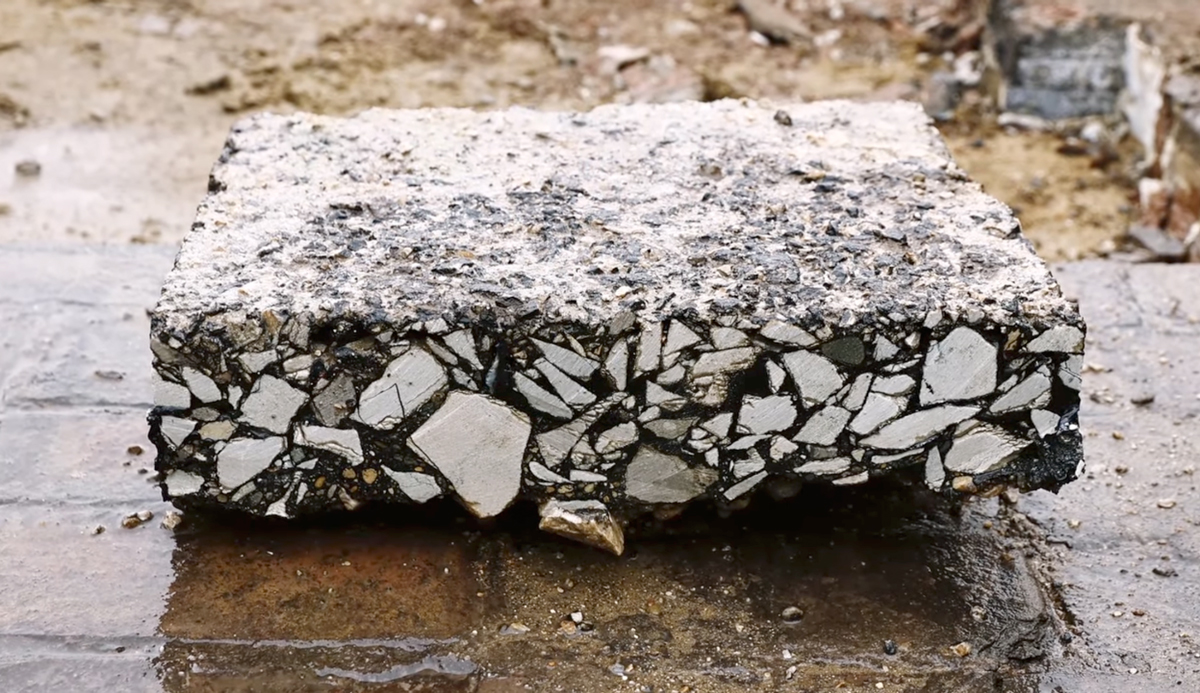
It’s amazing. Because I think what I do with this, if everybody’s okay, is leave that at the museum, just so we have a section of it, because we’ve never seen it before, assuming the museum wants it.